
Trinity Sunday
What is it and why it matters

Trinity Sunday
Trinity Sunday arrives every year on the first Sunday after Pentecost, usually without much fanfare. Unlike most feast days in the Christian calendar, it doesn’t commemorate an event. It celebrates a revelation—the deepest truth Christians confess about who God is. After the drama of Holy Week and Easter, the fire of Pentecost, and the sending of the Spirit, the Church takes a breath and turns its attention to the mystery that has been unfolding all along: God is Father, Son, and Holy Spirit.
It’s helpful to realize this is not a doctrine made up by theologians looking for complexity. It is the Church’s attempt to faithfully name the God who has met us in Scripture and in salvation history. God is beyond time and creation, so finite humans can only approximate an understanding of God based on what He has revealed to us in His word.
Trinity Sunday is the Church saying,
“This is who God has shown Himself to be—and this changes everything.”
What Is the Trinity?
At its simplest and most profound, the Trinity means this: God is one Being in three Persons—Father, Son, and Holy Spirit.
Or as is more fully defined in our Book of Doctrines and Discipline of the Global Methodist Church:
Article I—Of Faith in the Holy Trinity
There is but one living and true God, everlasting, without body or parts, of infinite power, wisdom, and goodness; the maker and preserver of all things, both visible and invisible. And in unity of this Godhead there are three persons, of one substance, power, and eternity—the Father, the Son, and the Holy Ghost.
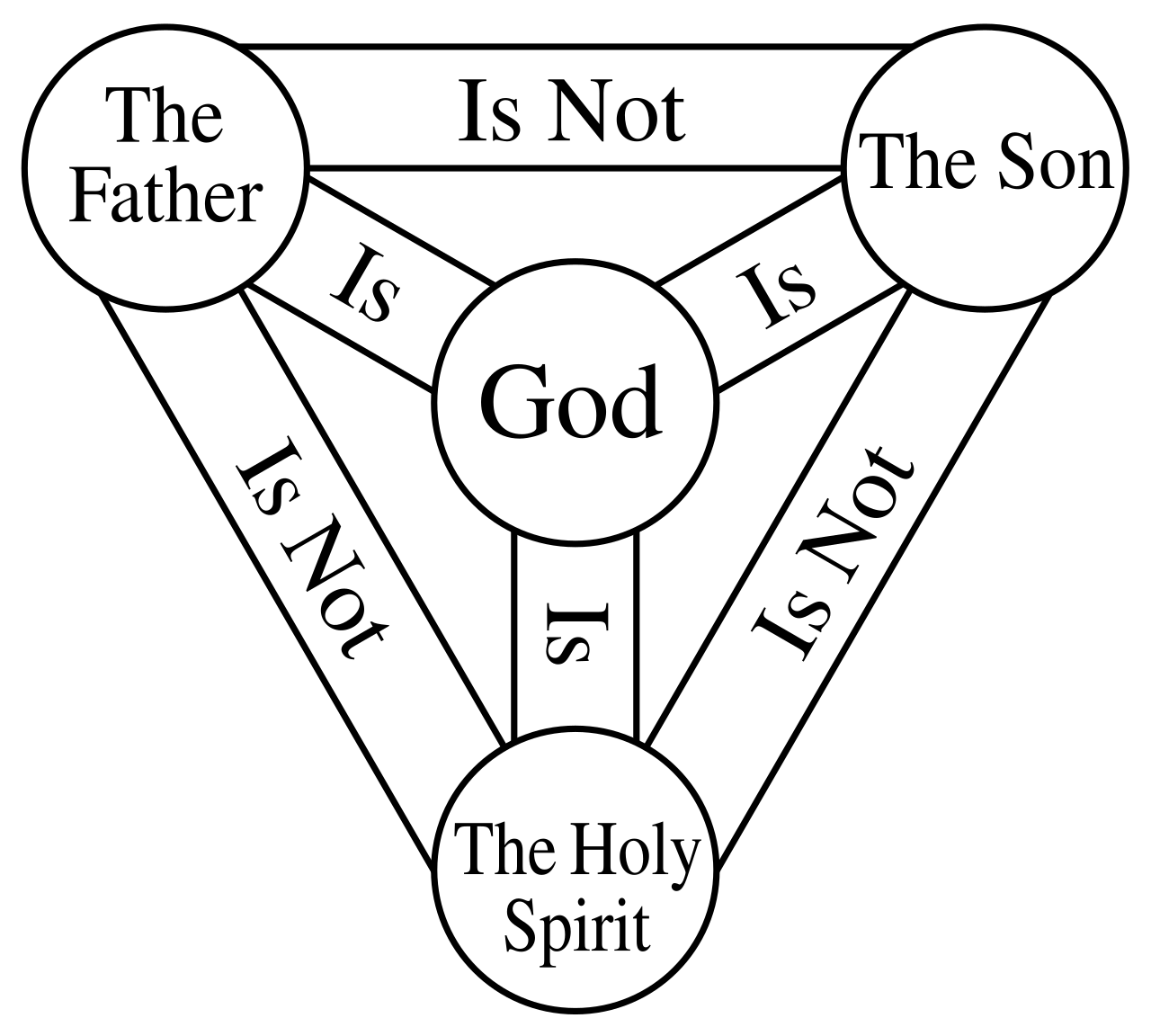
Christians do not worship three gods. We worship one God who exists eternally as a communion of love. Each Person is fully God, yet each is distinct. The Father is not the Son. The Son is not the Spirit. The Spirit is not the Father. And yet all three share one divine essence. Here is a helpful graphic demonstrating this dynamic reality:
The early Church didn’t arrive at this language quickly. It took centuries of prayer, deliberation, and wrestling with Scripture to articulate what believers already knew from experience.
The Trinity is not a puzzle to be solved but a relationship to be entered. As many theologians will tell you: If you think you’ve fully understood it, you haven’t understood it at all.


Why the Trinity Matters
The Trinity is not an abstract theological idea. It is the heartbeat of Christian faith.
The Trinity tells us what God is like. God is not solitary or distant. God is love—not as an abstract idea, but at the core of His very nature. Before creation, before time, before anything existed, God was already in relationship: Father loving Son, Son loving Father, and the Spirit as the bond of that love.
The Trinity shapes our salvation. The Father sends the Son. The Son gives His life. The Spirit applies redemption to our hearts and empowers us in living it out. Salvation is the work of the Triune God from first faith to fruitful living throughout our lives.
The Trinity forms the Church. We are baptized into the Church in the name of the Father, Son, and Holy Spirit. The Church is not a human organization—it is a people drawn into the mysterious, wonderful life of the Triune God.
The Trinity grounds Christian community. If God’s own life is mutual love, self-giving, and unity-in-diversity, then the Church is called to reflect that same pattern. The Trinity is the blueprint for Christian life together.
Why We Celebrate Trinity Sunday
Trinity Sunday is the Church’s annual reminder that Christian faith is not primarily about what we do for God, but about who God is.
We celebrate because:
The Trinity is the foundation of Christian worship. At the core of our worship is the Triune God. Many of our prayers and liturgies not only include ‘Father, Son, and Holy Spirit,’ but every worship service is structured toward this reality of God.
The Trinity is the story of Scripture. From Genesis (“Let us make humankind…”) to Revelation (“Grace and peace… from Him who is, who was, and who is to come”), the Triune God is present. Next time you take Communion in our church, pay close attention to the Prayer of Thanksgiving… it is a recounting of God’s redemption history and promise of ongoing activity according to the three persons of the Trinity.
The Trinity is the mystery at the center of our lives. God is creative in how he engages our lived reality. We don’t fully understand it, but we fully step into the mystery of it. And we experience the unfathomable ways God works in us and around us.
The Trinity is the Church’s identity. Trinity Sunday is a yearly invitation to return to our roots, to remember that we belong to a God who is infinitely beyond us and yet intimately with us.
In the rhythm of the Christian year, Trinity Sunday in many ways stands as a theological anchor. After the sweeping narrative from Advent to Pentecost, the Church pauses—not to look at an event, but to consider the very heart and character of God. Then it steers our lives forward into a season of reaching out to the world empowered by the Spirit.
This season after Pentecost (including Trinity Sunday) is the longest season in the liturgical year and focuses on daily mission, spiritual growth, and discipleship. It is often called ‘Ordinary Time.’ Oh, that being sent out into the world to reach people for Jesus would become ordinary for Christians! It is also called ‘Kingdomtide.’
Living the Mystery
The good news is Trinity Sunday is not about mastering a doctrine. Whew! Rather, it is about being drawn into wonder, then being led into the world as ambassadors (re-presenters) of God. The Trinity is the God who invites us into His life, His love, His mission. To celebrate the Trinity is to celebrate the God who is always reaching toward us, calling us into communion with Him and with one another.
So, let our curiosity and wonder lead us into the very presence of the Triune God — Father, Son, Holy Spirit!
Digging Deeper
Here are a few articles worth reading…
Why the Trinity Matters by Dr. Sue Nicholson.
On the Trinity by Ryan Nicholas Danker.
One in Three by Wayne Schmidt.